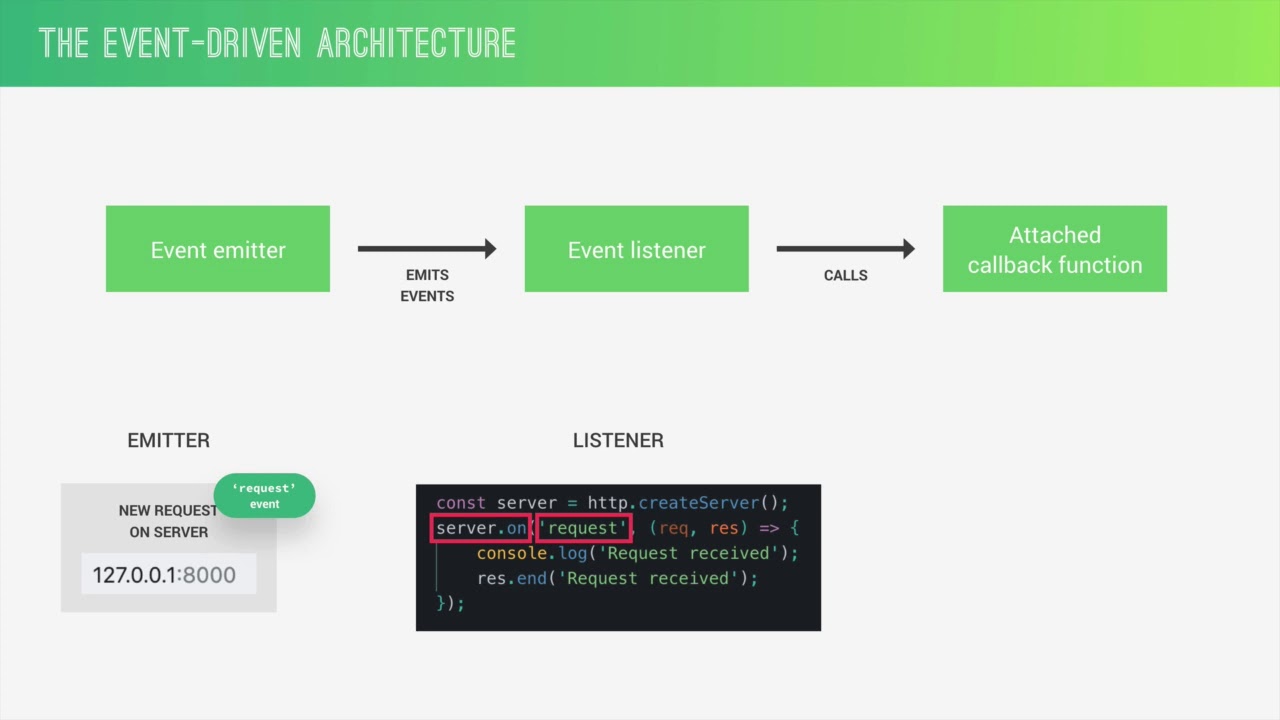
Let's understand how Nodejs event loop works.
Dynamic and detail-oriented front-end developer with 3 years of experience in creating visually appealing and user-friendly websites. Proficient in HTML, CSS, and JavaScript, ReactJs, with a strong understanding of responsive design and accessibility standards. Skilled in using frameworks such as Bootstrap, Tailwind.css, and Material-UI to streamline the development process. Strong problem-solving skills and ability to work effectively in a team environment.
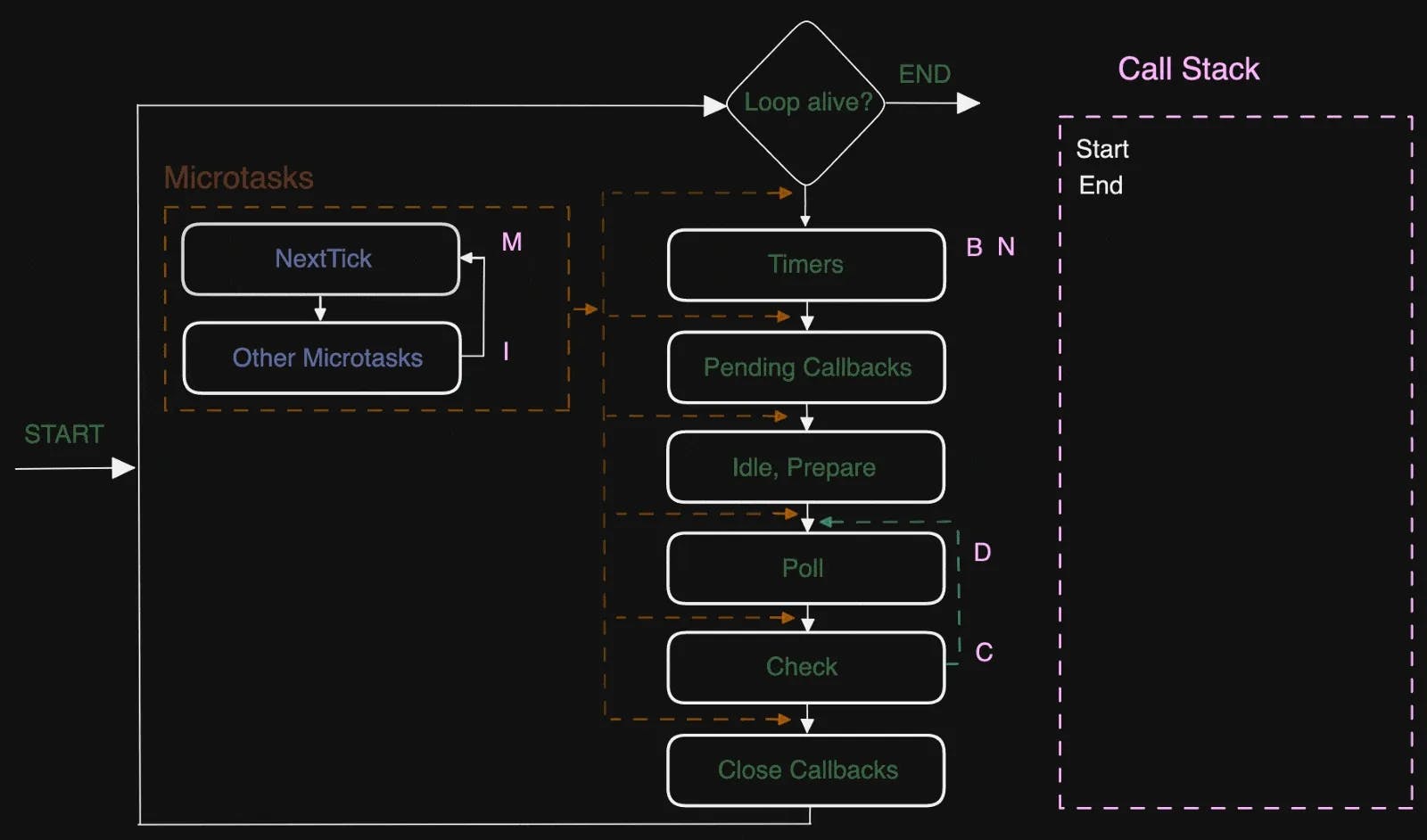
Node.js is a JavaScript runtime built on Chrome's V8 JavaScript engine that allows developers to run JavaScript on the server side. One of the most important and unique aspects of Node.js is its event loop. In this article, we will take a closer look at what the event loop is, how it works, and its significance in the Node.js ecosystem.
The event loop is the mechanism that allows Node.js to handle asynchronous operations in a non-blocking way. It works by constantly monitoring the event queue, which is a list of tasks that need to be executed. When a task is added to the event queue, the event loop checks if the task can be executed immediately. If not, the task is added to the event queue, and the event loop continues to monitor the queue until a task can be executed.
This allows Node.js to handle multiple tasks simultaneously, without blocking the execution of other tasks. This is particularly useful in scenarios where a task may take a long time to complete, such as reading data from a file or making an API call. Instead of waiting for the task to complete, Node.js can continue to handle other tasks, and then return to the task once it is complete.
The event loop also plays a crucial role in the management of non-blocking I/O operations. In Node.js, I/O operations are performed using a callback mechanism, where a callback function is invoked once the operation is complete. The callback is added to the event queue, and the event loop executes the callback once it is ready.
The event loop also provides support for timers, which are used to schedule the execution of a function at a specific time in the future. Timers are also added to the event queue, and the event loop executes them once they are ready.
Overall, the event loop is a fundamental aspect of Node.js that enables it to handle asynchronous operations in a non-blocking way. It allows Node.js to handle multiple tasks simultaneously and provides support for non-blocking I/O operations and timers. This makes it a powerful tool for building high-performance, scalable applications.
In conclusion, the event loop is an essential part of Node.js, it enables the platform to handle many concurrent requests and makes it efficient in handling I/O operations. The event-driven, non-blocking model of Node.js is one of its biggest strengths, making it a popular choice for building real-time and high-performance applications.